



Celebrating Our 165th Anniversary
Loving People. Serving People.
St. James' is the only Episcopal Church in Oldham County. We are members of the Diocese of Kentucky, which essentially is half the state beginning in Shelbyville and heading west to Paducah. The Diocesan website can be found HERE.
On May 24, 1858, three families gathered in Pewee Valley in what was to be the first parish meeting of Pewee Valley's St. James' Episcopal Church. The purpose of the meeting, held at the home of Thomas Smith, was to petition for admittance to the Diocese of Kentucky at the annual Convention being held the next day.
 On May 27, 1858, the Diocesan Convention voted to admit St. James' as a Parish of the Diocese of Kentucky, and, thus, the parish was born. From that time on, St. James' has stood, through abundance, adversity, and many trials as an Episcopal church with a strong identity: Lord, here we are to serve.
The tiny congregation, consisting of only three families and three communicants, had existed for two years prior to its charter. In an agreement with the Rollington Methodist Church, several Protestant Episcopal families had been holding worship services in the borrowed building twice a month. Ministers from nearby Louisville, assisted by lay readers, had been conducting services. The Rev. John West took charge of the new parish, serving for one year.
A decade later, in 1868, with the end of the Civil War, the Kentucky General Assembly duly incorporated the parish. Under the guidance of the new rector, the Rev. James Carmichael, the vestry commissioned former Confederate General E. Kirby Smith to canvas the cities of Louisville, Lexington, and Frankfort, Kentucky, as well as the surrounding area of Pewee Valley for subscriptions and contributions to be used in building a church for St. James'.
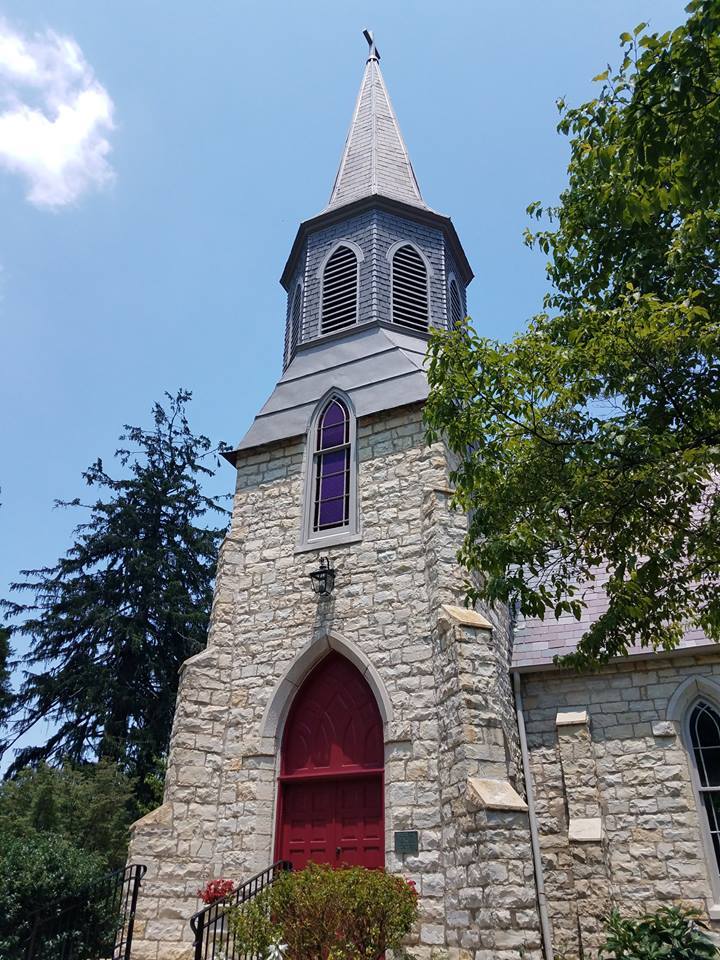
General Smith and the vestry were successful, and in 1869 the building, of native Pewee Valley limestone, was completed at a cost of $4,000.
The St. James' church is modeled on a 12th -century English country church. It began with sketches made by Kentucky Bishop Benjamin Bosworth Smith on a trip to England and became a significant work of William Henry Redin (1822-1904), a Louisville architect who was well known as an ecclesiastical architect and builder. The church is so historic that the building was entered into the National Register of Historic Places in 1985.
In 1902, the only structure on this property remained the same — the church — no other buildings — no rectory. No cemetery, no education hall, no social hall.
And yet, 1902 would prove to be a very significant milestone for the church because in February of that year, a tornado came through the area ripping off the church steeple.
The stone cross atop the tower fell through the nave and into the basement. Repairs and a new steeple were estimated to cost $1,900, almost half of what it took to build this church back in 1868.
It was approximately a year a half before the church and steeple were repaired.
In 1908, members of the church began the process of building a rectory. Fifteen acres of the original 20-acre site were sold to provide construction funds. Two years later the building was ready for occupancy and, in 1911, the Rev. Simon Clinton Quinn and his wife moved into the rectory. However, it wouldn’t be until 1915 that electricity was running to the rectory and the church as well.
Even in those days, most Pewee Valley residents worked in Louisville, taking advantage of the regular commuter trains operated by the L&N Railroad and the interurban railway.
Pewee Valley was a quiet piece of early 20th-centry suburbia and St. James' was active with such rituals of Americana as the old-fashioned ice cream social.
Many, many priests have served the parish over the 162 years. Our church, small as it is, has been served by many spiritual leaders — individuals who have gone on to positions of authority in the Episcopal Church. Among them were the Rev. Quinn, who became bishop of Texas. Bishop Smith, who admitted the fledgling parish, became Presiding Bishop of the Episcopal Church. The Rev. Robert Board, who served St. James' from 1934 to 1974, also served St. Luke's, Anchorage for much of that time.
Lest we forget — NOT. The women of the congregation, always a strong support, often were asked to raise funds for the church. Around 1900, the St. James' women solicited favorite recipes from individuals worldwide. From this effort, they published a book that remained popular for many decades — a cookbook entitle “Favorite Food of Famous Folks”.
Again, in 1920, the Women's Guild was called upon to repeat its earlier successes. To raise money toward the purchase of a Pilcher pipe organ, the women conducted burgoo suppers, lawn socials, a play — and a circus! In 1924, the organ was purchased and installed.
There were numerous Rectors/Vicars during some challenging times through World Wars, the Great Depression, and other challenging times for our parish. In 1978, the Rev. Logan Jackson came to St. James' and remained until 1984. The Rev. John MacLean followed Rev. Jackson and served our parish from September 1986 to January 1997.
In 1998, the Rev. Paul Jeanes was called to be rector and served for close to eight years. The Rev. James Trimble followed him, serving for five years. In March 2018, the Rev. H. Elizabeth Back was called to be our rector. Our current rector, the Rev. Debbie Dehler, was called to be our rector in March 2023.
Today, the St. James' Episcopal church building, the only Episcopal parish in Oldham County, remains a fine example of the rural Gothic Revival parish church style. This church and its picturesque setting have been a community landmark since 1869. Its people remain proud adherents to a traditional, but inquiring, faith in their church.
Since its early beginnings, with three families and three communicants, this "English Country Church" in Pewee 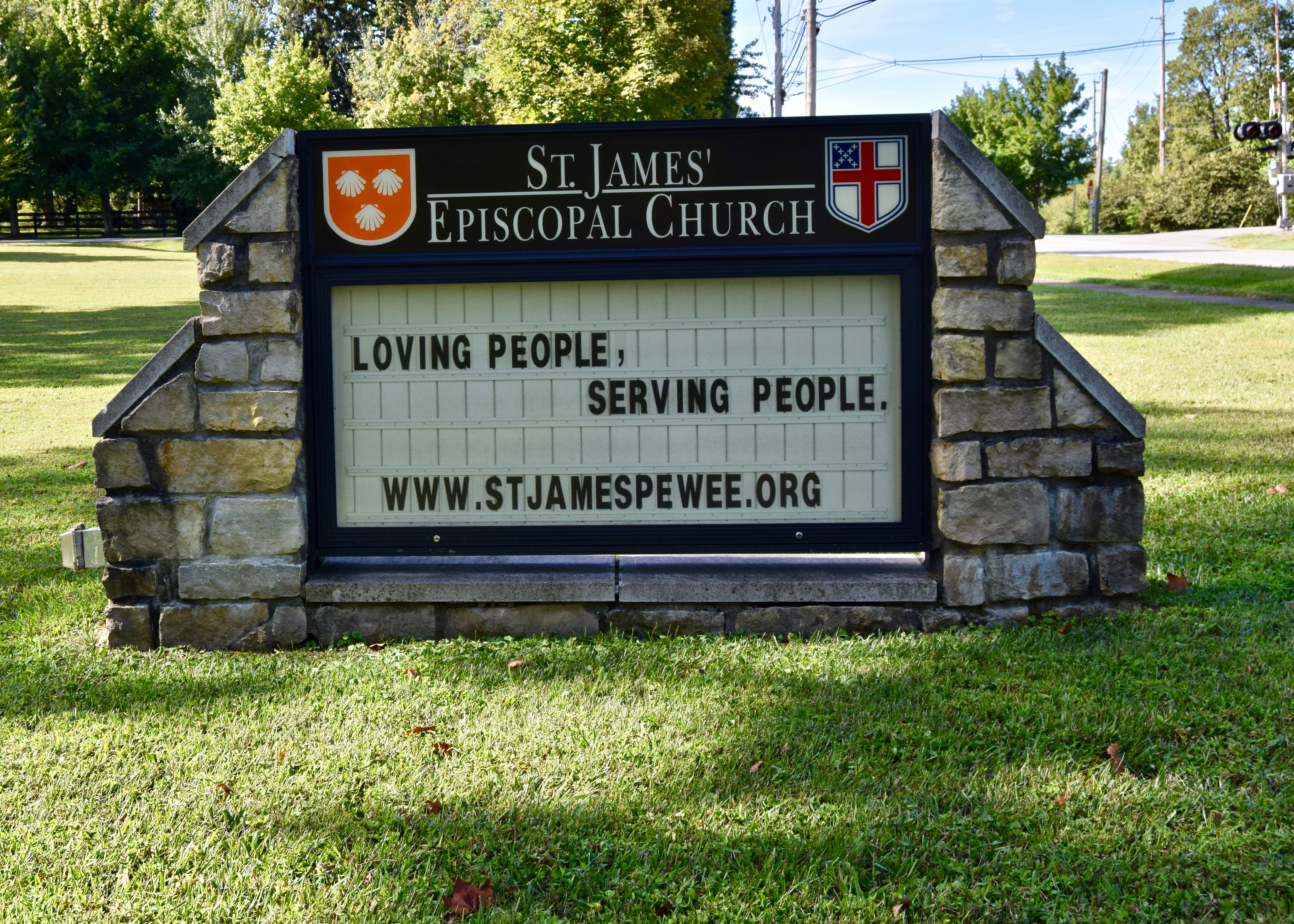 Valley, Kentucky, was and continues to be an active church — operating at a high energy level.
We are proud of our heritage and proud that we have continued for 165 years. At St. James', we are firmly dedicated to our mission:
LOVING PEOPLE. SERVING PEOPLE.
165 years and still going strong
for a list of the many inreach and outreach ministries in which we’re involved, click HERE