



 Loading...
One of the things I think is so hard about reading scripture is remembering that the people who finally wrote down the oral traditions were living in a time that is not now.
We like to think that the Bible is full of eternal truths that stand the test of time, but in reality, the stories in the Bible were told often as cautionary tales, as ways to ensure the future of humanity, and as safety warnings.
Scripture needs to be looked at from the context in which it was written. And I say written, not spoken, because according to scholars, each of the Gospels were written forty to sixty years after the death of Christ. None of these stories represent an eye-witness account, and even the written languages were different than the language Jesus and his disciples would have spoken.
They likely spoke Aramaic, and much that was written was originally in Greek.
There is much to unpack when we realize the first biblical stories were not originally written in the King James version of the bible. Even more to unpack as scholars continue to wrestle with ancient and dead languages while discerning what was happening politically, spiritually, and communally.
In short, our beloved Bible has many translations, interpretations, and, honestly, misinterpretations and mistakes from the act of copying by hand.
Consider that we still make typographical errors, and we have spell-check!
Our Bible is filled with cautionary tales based on what was happening when the words were finally written down, from a person who likely had heard it from a friend who heard it from a friend who heard it from a friend. And it is even possible they may have had their own agenda or purpose for putting it just this way.
I preface my sermon this way because the Gospel today seems to condemn the decision to divorce. And while this particular set of verses may have influenced many people over thousands of years to remain married, even in bad marriages, that is not what this Gospel is about. It is not there to condemn those who are or will be divorced.
We need to look at what marriage in the time of Jesus meant. And I’m sure most of you know, marriage in ancient times rarely had anything to do with love.
Instead, marriage was more of a commitment between families or clans to create a peaceful union between communities. Therefore, if a marriage ended in a divorce, it was not simply two spouses whose lives would be affected. It would be two communities who often needed to rely upon one another for security, health, shared resources, and to increase the population.
This exchange between the Pharisees and Jesus challenges what we might call the “sanctity” of marriage. We have heard in other stories of women being dismissed by their husbands, accused of adultery or sent away because they may have done something as trivial as burning a meal.
We also know that a woman who was widowed was expected to be embraced by the next brother of the dead husband as either a servant or as another wife, or if they were lucky, to be an honored member of the family until her death. And if there was no brother to go to or who didn’t want her, a widow, and her children, if there were children, were put out into the streets, left to beg, to find shelter with others who had been shunned, to become one of the marginalized—dependent on whatever kindness others may offer or on services provided by the community. Most of the time, a woman had no financial means to support herself or her children, so divorce could mean death to all.
In this brief encounter between the Pharisees and Jesus, we don’t “see” all the context and implications that would have been recognized in the telling of this story back then. We only get snippets, and the world has changed dramatically, at least in the West. These snippets leave us feeling perhaps convicted of something that is now very different than it was then.
Marriage and child rearing have been around since the beginning. We hear about that in Genesis, where we heard today, in the second creation story, God takes a rib from Adam to create Eve, making them two parts of a whole. We might not understand it this way any longer, but this story is also about bonding communities together for the sake of humanity.
Even though the historical significance of divorce is important here, Jesus adds to the complexity when he acknowledges that women have agency and can divorce their husbands, just as a man can. This was likely unexpected news to the Pharisees. However, Jesus says, if either remarries, they commit adultery.
This is a bit frustrating to consider, and it may be what people think the reason why when a couple comes to the Episcopal Church and one or both are divorced the priest must obtain permission from their bishop to perform the ceremony.
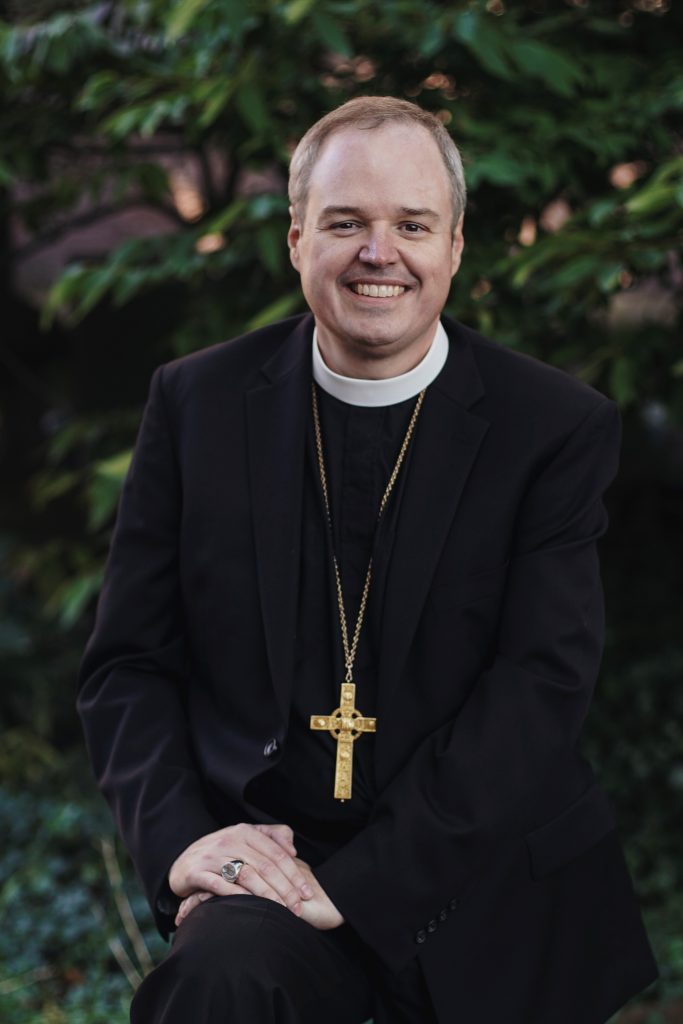
Rest assured, at least here in the Diocese of Kentucky, the request to the bishop is about ensuring the former marriage was legally ended. The bishop also expects that the couple will go through premarital counseling so that any issues that may linger after the broken marriage are addressed. It doesn’t have to do with adultery.
Ultimately, everything Jesus teaches is about the importance of being in union with God and that people live in healthy, life-giving community with one another.
When this Gospel abruptly turns to the children, it is Jesus’s way to remind the disciples, those bringing the children, and anyone within earshot then and now, that our relationship with God should be as dependent as that of a child with a parent.
Jesus is always speaking and teaching and living in ways that remind us how to love one another. This Gospel, as judgmental as it may feel, isn’t about whether divorce is right or wrong.
Instead, it is about the importance of caring for one another, and especially caring for those among us who are the most vulnerable. It reminds us that a certificate of dismissal or a divorce at any time may lead to leaving people vulnerable, marginalized, and in danger, risking the strength and safety, the commitment and love, that can be found in community.
To put a fine point on it, Jesus reminds us, as he blesses the children, that children are the most dependent upon others.
When we look to God, receiving all that God provides with awe and thanksgiving, we become like children. Jesus welcomes the children, he embraces them, probably plays with them, tells them stories, and teaches them all he can to help them recognize that they are not islands, they are not alone. He wants them to know their value through caring for them and ensuring they are safe and beloved by the communities where they are raised.
This is our example about what it means to love one another, to honor the humanity and dignity of every person, to assist through a variety of means.
For when we live lives following the example of Jesus, we are showing God our love, we are receiving the abundant gifts that can only come from God, and we are recognizing our dependence on our Creator.
Amen.