



 Loading...
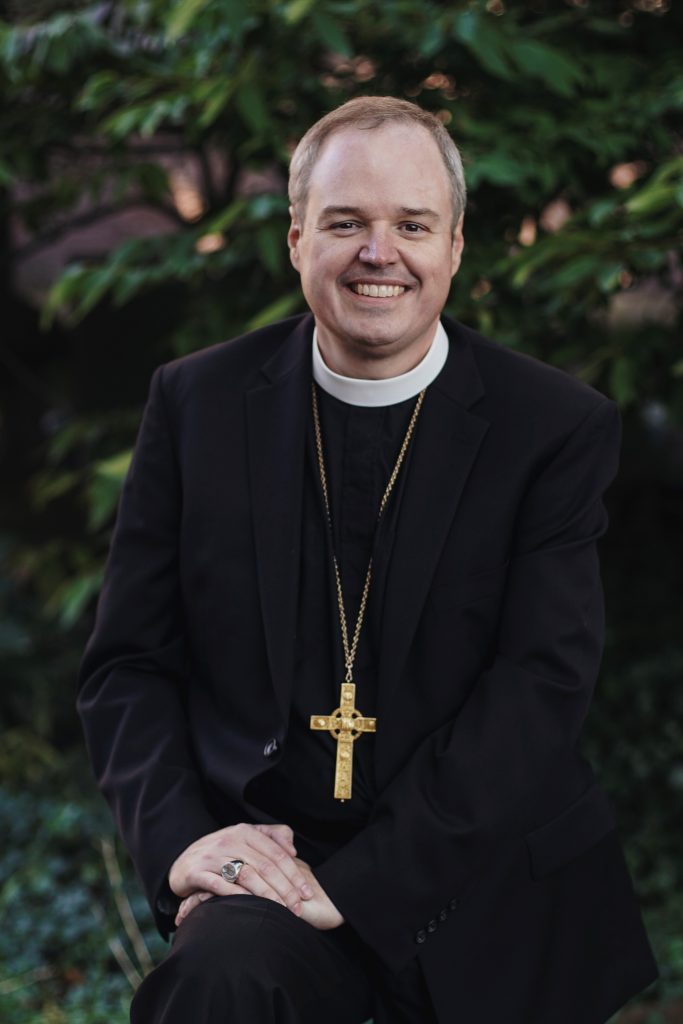
Earlier this week, retired Bishop Steven Charleston wrote: “I was an artist without color, painting only the black and white reality I knew, the binary world of endless opposites, the gray lands in-between, my life a still-life of faded flowers – then Spirit came along -- splashing my world with color, opening my eyes to see those colors, a kaleidoscope of possibilities, a joy, a hope, a bright dream from which I will never awake.”
It was just what I needed to read after listening to a couple of translations of today’s Gospel. I was in my head, rolling around with my feelings, trying to identify why I was so very uncomfortable with what Jesus was saying. I did not want to consider that the Jesus I know would be so, well, black and white, so binary. I could not believe that Jesus would turn people away without seeing the possibilities that lay within each one of us, and I was feeling a bit frustrated by the stark either/or binary of good and evil, of the darkness and light found in this passage.
You see, the month of Ramadan begins this evening. And our Muslim siblings, while they do not see Jesus as their Savior, they do talk about him as a prophet. Are they unworthy of God’s grace?
On April 22, many Jews will celebrate Passover. Known as God’s Chosen, they do not see Jesus as their Messiah. Are they to be considered condemned?
There are so many people who have lost their religion, but maybe not their faith, or their knowledge of the Spirit, after becoming disillusioned by the human constructs of organized religion. Is there no chance for them?
Those who believe in God, or some Higher Power, but do not find God or seek God through Jesus…are they not beloved by God?
What about those who haven’t met God yet? What about them?
I wondered, where is the grey? How do we see God when we only look at the options, in the words of Bishop Charleston, as “the binary world of endless opposites.”
When I imagined the brilliant colors of the bishop’s meditation, I thought… “There it is!” This is what I need to be reminded that while even Jesus taught with an either/or to strengthen his points, his life, his ministry, played out in the world of grey, and ultimately, in the vibrant hues of all the colors in God’s beautiful creation.
I believe it is important to remember that when Jesus teaches, he can be very binary. Very “this way” or “that way.” Very “either/or.” He uses this style of communication to make a point. To sometimes create a caricature of a situation to help others see the ridiculousness of our limited view of the world.
But his life and ministry reflect so much more nuance, don’t they? His life and ministry show us that we can look deeper, see more fully, and recognize the uniqueness in every living thing.
We are not all the same. Our stories, our life experience, our family systems, our friend groups, all these, and more (!) paint us with a variety of colors that are definitely not “black” or “white.” They definitely do not represent opposites, or binaries, or either/or.
We live in a both/and world.
We live in a colorful world.
We live in a grace filled space where God wants us to be present with our Holy Creator and with one another. A place where our lives are filled with beautiful colors that grant us the ability and desire to see beyond either/or, and instead know the broadness of both/and.
Sure, we need rules. We need commandments. We need laws. They keep us safe.
But we need to know that the depth of God’s love comes with nuance. It comes with story. It comes with relationship. It comes when we talk with one another.
Jesus says it comes with and from LOVE. God’s love for us and our love in return.
Our eternal life is bound up in that love. When we love, when we treat others with respect and dignity; when we see their humanity wrapped up in our own—even when, and maybe especially when, their lives are vastly different from our own; we are exhibiting God’s love to the world.
While Jesus talks about condemnation and evil and hate in this Gospel, he also reminds us that he was sent by God to teach us how to turn our attention back to the love of God. To turn away from condemnation, evil, and hate because we LOVE others.
What does that kind of LOVE look like?
- We want for others what we hope for ourselves—
- We love one another as Jesus loves us—
- We live by the “Golden Rule” (which, by the way, can be found in most religions) of treating others as we would like to be treated—
with, as Rev. Mark Sandlin adds: IF WE WERE IN THEIR SHOES. Treat others as we would like to be treated if we were in their shoes…
- We want our humanity to be wrapped up in the humanity of others—
- All this is possible because we know and love God first.
We hear in the reading from Ephesians that God is rich in mercy. That we are “what he has made us, created in Christ Jesus for good works.” We are saved by faith—not by doing anything special, but by simply being given this one life to live, recognizing that this gift is for every single one of us, not just me, or you, but every single one of us…no matter what has happened in our lives.
If we each have been given this gift, who are we to decide the worth of another? Who are we to define anyone in a binary, an either/or, when we see within ourselves the both/and, the colorful “kaleidoscope of possibilities?” (Thank you, Bishop Charleston!)
This is my hope for humanity. That when we see ourselves in living color, in technicolor, we can also see others just as vibrantly and set aside our binary expectations of what we may think is right or wrong, in or out, true or false… and see the wonder of God’s created humanity within each of us.
Amen.